Scaffolding firm fined £50,000 after van found at more than double its weight limit
The 3.5-tonne van weighed 7,530kg with an unsecured load and under-inflated tyres, after the driver was slow to follow officers in.
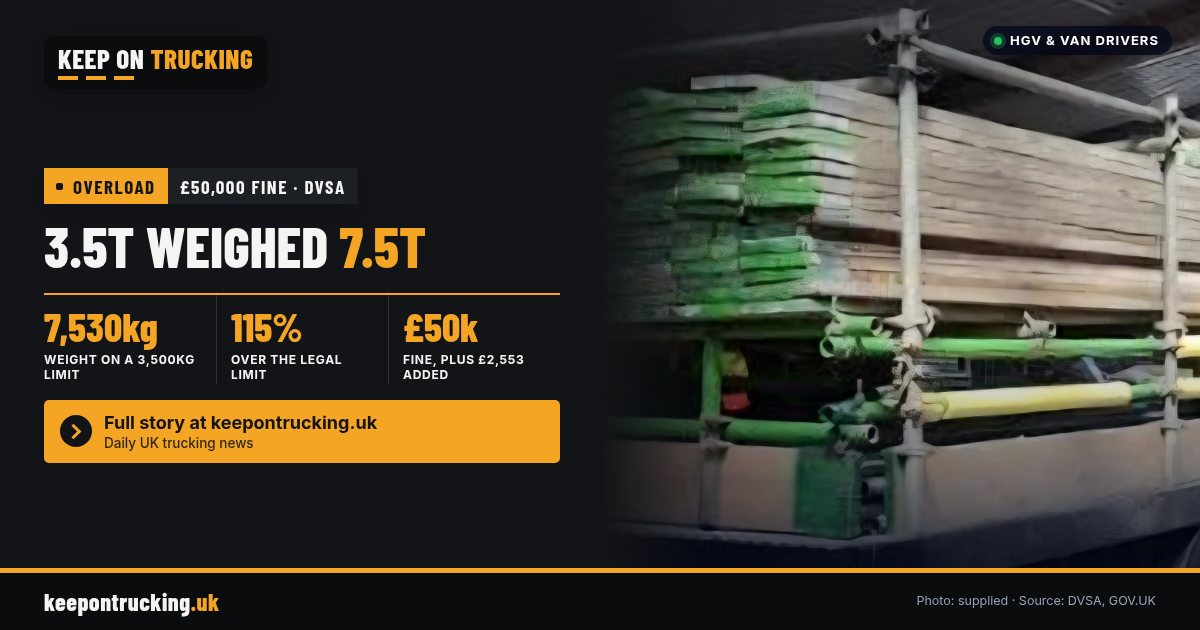
Scaffolding firm COR Scaffolding Ltd has been fined £50,000 after DVSA found one of its 3.5-tonne vans weighing 7,530kg, more than double its legal limit.
The firm was found guilty at Lavender Hill Magistrates' Court on 8 October 2026 of driving with an overloaded vehicle, driving with an unsecured load and having under-inflated tyres. It was also ordered to pay a £2,000 victim surcharge, and DVSA was awarded £553 costs.
Enforcement officers spotted the van and signalled for the driver to follow them to a check site. According to DVSA, the driver didn't follow straight away and slowed to 35mph on a national speed limit road, forcing other traffic to go round. At the site, examiners found the van 4,030kg over its 3,500kg limit, an overload of more than 115%, carrying a load DVSA described as dangerous and unsecured.
At an interview in April 2026, the company's director told DVSA he hadn't known the van left the yard in that condition, and that the driver had since been sacked.
DVSA said the case shows operators need systems to keep their vehicles safe, covering loading, weight and condition, whether or not they hold an operator's licence. Drivers' walkaround checks are part of that, but the responsibility sits with the operator. It added that firms overloading 3.5-tonne vans to get around operator licensing "will get caught" and face substantial fines.
How the penalties work
- Smaller overloads: DVSA fixed penalties of £100 to £300
- 30% or more over, or 5 tonnes over: normally a court summons instead
- DVSA normally allows 5% leeway, but not once you are 1 tonne or more over
- At the roadside, DVSA can stop an overloaded vehicle going any further
Before you leave the yard
- Check the plate and your payload
- Secure every load, however short the trip
- Check your tyres on the walkaround
Source: DVSA, GOV.UK, via our UKcheckpoints page.
Source: UKcheckpoints