

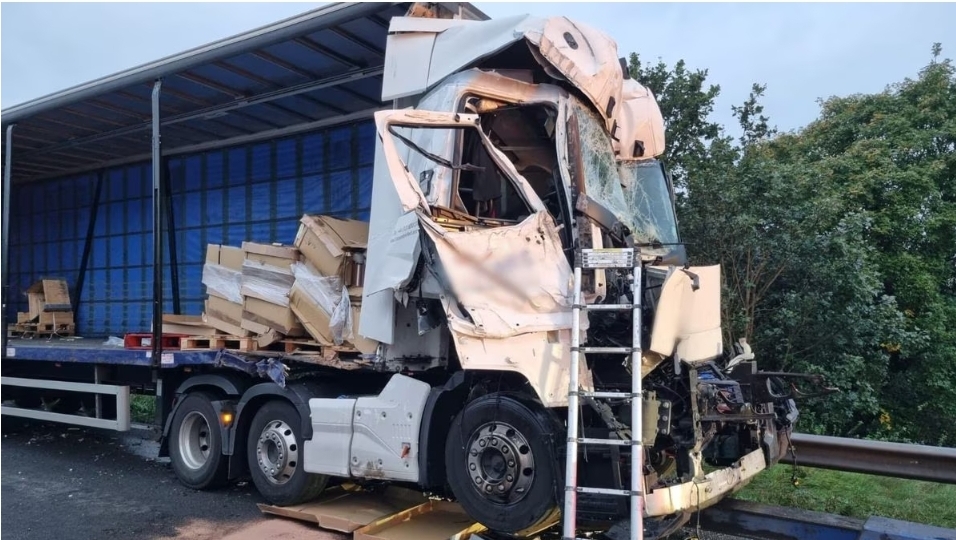
Due to a significant diesel spillage, all four lanes of the M6 motorway between Junction 13 (Penkridge) and Junction 14 (Stafford) are anticipated to remain closed throughout the day.
The closure was necessitated by a collision involving three lorries, which resulted in substantial damage to the vehicles.
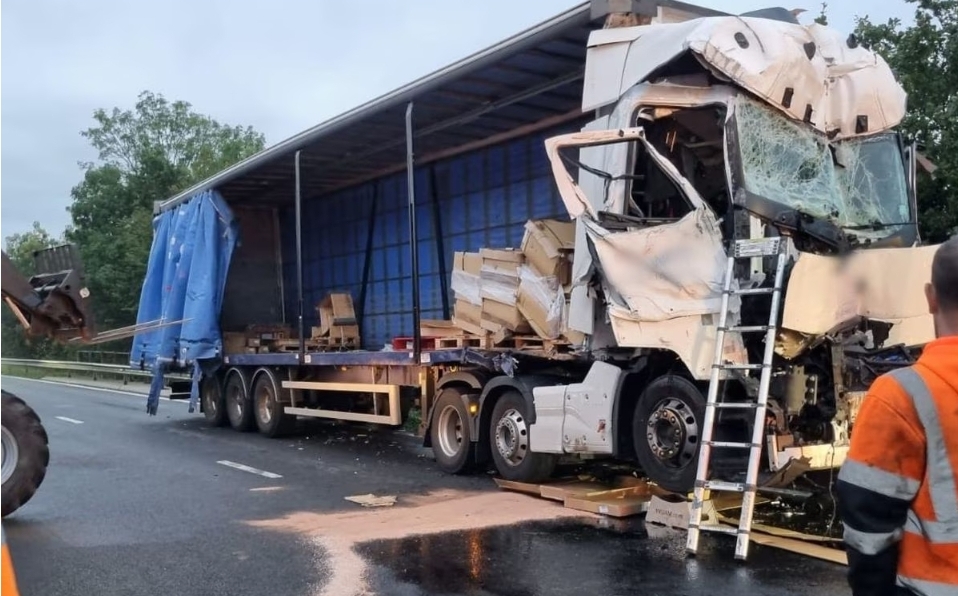
Emergency response was swift, with West Midlands Ambulance Service attending the scene promptly.
One of the lorry drivers, a man, sustained potentially serious injuries and was taken to Royal Stoke University Hospital for treatment. Another individual was assessed and treated for minor injuries before being discharged at the scene. The third occupant of the vehicles declined assessment.
To handle the aftermath of the incident, Staffordshire Police, along with National Highways traffic officers, are leading a coordinated response. Initially, Staffordshire Fire and Rescue Service and West Midlands Ambulance also responded, although they have since left the scene.

The collision led to a significant oil and diesel spillage on the carriageway, necessitating extensive cleanup efforts. High-pressure cleaning techniques, specifically hydro-blasting, were employed on all four lanes.
Traffic within the closure has been released, but there are substantial delays, with queues of up to 45 minutes reported at Junction 13.
Motorists are advised to follow the designated diversion route indicated by the hollow diamond symbol.
Northbound diverted traffic should exit the M6 at Junction 13 and take the third exit onto the A449 towards Stafford. Continuing along the A449 for approximately 3 miles, drivers should reach the Queensway Island. At the Queensway Island, take the third exit onto the A34, heading towards Stone. After approximately 1 mile, at the third roundabout (with the A5013 Eccleshall Road), take the first exit onto the A5013 and travel for about 1 mile to reach M6 Junction 14. From there, take the third exit to rejoin the M6 northbound.
Please plan your journeys accordingly, considering the ongoing road closure and potential delays.


